The article unfortunately does a horrendous job at highlighting AerynOS’ unique features by only giving vague descriptions without going into any technicality that matters.
FWIW, my two cents on AerynOS:
It offers (yet) a(nother) novel approach to atomic distros. The gist for its ambition (or, at least, my understanding of it) would be NixOS, but with FHS intact and without a DSL.
Yes, the big feature seems to be their package manager. But just because an update succeeds does not mean it did not break anything.
They also have their own boot manager and they seem to be fans of Rust, which explains the COSMIC desktop option. They have their own build system.
It is not clear to me that they are doing anything novel beyond that.
They do not have centralized configuration as far as I am aware so they do not go as far as Nix. As a Chimera Linux user, the atomic updates and bespoke build system feel like things I already have.
Overall it sounds like a nice project. But the improvements seem more incremental than revolutionary.
They do not have centralized configuration as far as I am aware so they do not go as far as Nix.
Which is why it’s (only) their ambition 😜. But thanks for prompting me to clarify!
Furthermore, their wording would suggest that configuration is not part of what’s declared. Which -at best- would make it relatively light on how declarative it is.


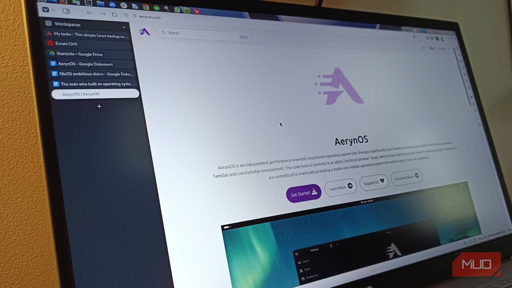
The article unfortunately does a horrendous job at highlighting AerynOS’ unique features by only giving vague descriptions without going into any technicality that matters.
FWIW, my two cents on AerynOS:
DSL? Digital Subscriber Line? Damn Small Linux?
Domain-Specific Language. In the context of NixOS, that would be the Nix language.
Thanks!
Yes, the big feature seems to be their package manager. But just because an update succeeds does not mean it did not break anything.
They also have their own boot manager and they seem to be fans of Rust, which explains the COSMIC desktop option. They have their own build system.
It is not clear to me that they are doing anything novel beyond that.
They do not have centralized configuration as far as I am aware so they do not go as far as Nix. As a Chimera Linux user, the atomic updates and bespoke build system feel like things I already have.
Overall it sounds like a nice project. But the improvements seem more incremental than revolutionary.
Which is why it’s (only) their ambition 😜. But thanks for prompting me to clarify!
Furthermore, their wording would suggest that configuration is not part of what’s declared. Which -at best- would make it relatively light on how declarative it is.