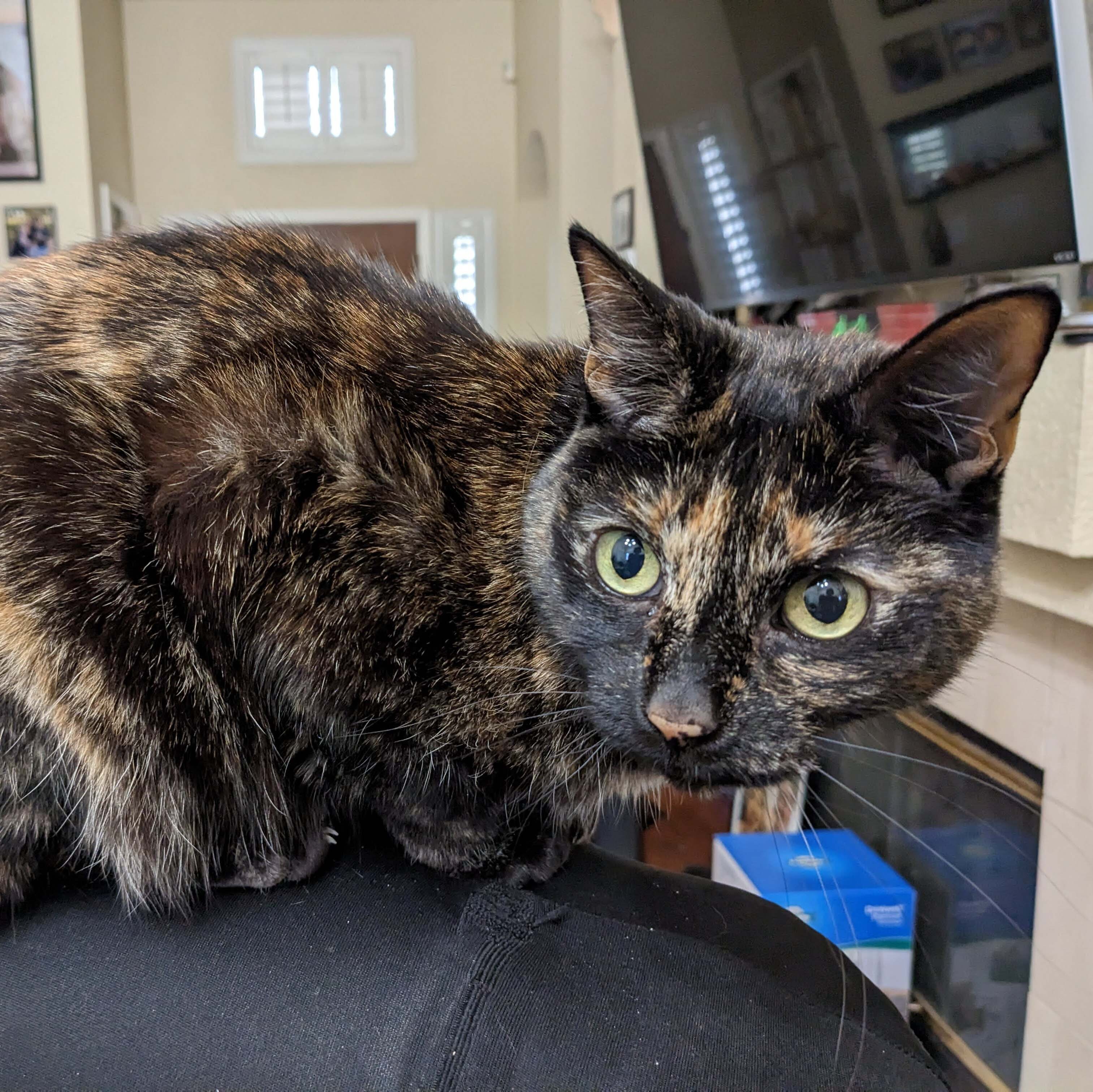
I’ve run Pi-hole in my homelab for years and benefited from using the service. As well as the hands-on education.
With that said, what is everyone else’s experience with the software? Do you use Pi-hole in your homelab setup? I would assume many hundreds of thousands of people use Pi-hole.
Edit #1:
The image attached to this post is my RPi 5, which hosts the Pi-hole software. Big supporter of the whole “SBCs for learning and home improvement” mentality.
Edit #2:
It is interesting to see the broad support for Pi-hole and DNS blockers in general. The more options, the healthier the tech ecosystem is, which benefits everyone.
I am one of those zillion users. I love it.
I feel bad for households without a nerd to set up the family pihole
Like families where nobody cooks
You have never had some family member experience a broken website that they needed to work but you were not around to fix it on the server side?
That’s the reason I no longer have a pihole…
That’s why my wife is raw dogging the internet. I excluded her devices from Pihole after i heard too much “site x is not working”. She bought from some fake shops. I didn’t, thanks to our block list.
deleted by creator
deleted by creator
deleted by creator
I set a separate SSID on the wifi without the pihole as the DNS provided by DHCP that they can use.
This. I use pihole as just a DNS server with blocking off since it was too much to have to deal with the random broken pages.
@bernhoftbret@lemmy.world pihole is great. I use AdGuard now but either is good. The important thing is having a dns server at home
Agreed. DNS filtering is an important tool for safety, privacy and general well-being.
I installed a Pi-Hole largely to serve as a local DNS, but enabled the ad-blocking 'cause it seemed silly not to. My wife got very upset. Apparently she likes the ads.
With that aside though, it seems to work quite well. Just make sure to (a) use a reasonably-powered device (my Pi Zero appears to be taxed by it) and you should probably use an Ethernet connection 'cause my Pi Zero regularly flakes out so DNS requests fail due to the IP being “unreachable” for a half second.
Apparently she likes the ads
Must be to most wife thing I’ve ever heard :)))
My wife got very upset. Apparently she likes the ads.
Set static IPs for her devices, then whitelist that device IP past the block lists by adding it to a group, then regex allow domain: ‘*’ for that group.
Did that with my mother.
She gets her instagram and facebook, I will block the hell out of it.
My wife got very upset. Apparently she likes the ads.
Ahhh the WAF (Wife Acceptance Factor). I created a separate vlan just for her when she comes over, and she can have all the ads and crap she wants. Just keep it off my network.
how does flaking out present itself?
I had an issue for a long time where the pihole seemed to be bricking the network, and combined with the Eero mesh it was a pain to bring back online each time due to order of operations restarting devices and enabling/disabling DNS on the router
Basically the IP stops responding to any traffic. At one point I set up a constant ping, and every once in a while I got something like “destination host unreachable”. It doesn’t happen often enough for me to move the service onto a physical device though. That’s work and I’m tired like, a lot.
hmm. I wonder if that was what was happening to me
it hasn’t happened since my ex moved out, so there’s less traffic…
but I think it actually stopped before that.
I ran it on a Pi Zero W for a bunch of years, and it was as stable and problem free as it gets.
Early this year I swapped out my wifi/router for a minipc running OPNsense. I retired the pihole since OPNsense has Unbound built in.
I run Pi-Hole in a docker container on my server. I never saw the point in having a dedicated bit of hardware for it.
That said, I don’t understand how people use the internet without one. The times I have had to travel for work, trying to do anything on the internet reminded me of the bad old days of the '90s with pop-ups and flashing banners enticing me to punch the monkey. It’s just sad to see one of the greatest communications platforms we have ever created reduced to a fire-hose of ads.Thats what ublock is for. But yes.
Ya, I actually run both uBlock Origin and NoScript in my browser on my phone and personal machine (desktop). On my work laptop, those are a no-go. So, I get the full ads experience on my work machine when traveling.
I use Pi-Hole unbound, and I really like it. However, Technitium seems to be the new favorite and has a lot of bells and whistles that Pi-Hole doesn’t. I haven’t run Technitium basically because Pi-Hole fits my needs. If I were just starting out, I would probably consider Technitium.
I’ll have to check on this one, never heard of it, and unbound has a tendency to randomly fail on me after a few months.
I have Unbound configured on my pihole, it’s been running fine for years.
unbound has a tendency to randomly fail
Huh…what do you do to revive it?
I’ve thought about switching to Technitium but dealing with network tools is a whole can of worms I don’t want to open up again until PiHole or Unbound shits the bed on me lmao. PiHole’s working just fine for what I need it to do.
PiHole’s working just fine for what I need it to do.
Let sleeping dogs lie.
Technitium is much easier to set up than pihole/adguard IMO, as it supports recursive resolving or DoH/DoT out of the box.
It also supports mirroring root servers, clustering etc. I switched last week and I’m very happy with it
I have pihole running on an old Raspberry Pi B and it just chugs along. Except for the wonky update they put out a few months ago. That took some cleaning up after.
I check the dashboard a few times a day and it’s a good way to notice network issues and misbehaving programs.
I’m also running it through cloudflared to encrypt the requests, in case my ISP is snooping on them.Same, the og one (v1. 0 with PCB without the holes!) at my parents place runs it for a very long time (the second sinkhole is on proxmox on a beefier server, the Pi is there just bcs I still love it).
Indispensible.
A longer answer would come out of: “What do you think of a home lab environment without Pi-Hole?”
Dispensible
I like it but just not on a Pi. I found it too unstable. I found it easier to host in a docker container.
Although these days i just use blocklists on my router.
But why not on a Pi, in a docker container? My pi 3bi+ begins to show some age but has been rock solid for 3 years now… I even forget it’s on sometimes ! (Except when nothing gets resolved 😅🤷♂️)
I eventually moved to docker on the pi. But the pi would randomly go down. I had two of them for redundancy but eventually one of them ended up corrupting its sd card and shortly later the other went down unexpectedly while i was at work and the whole family lost connection without knowing how to fix it.
Decided to move to to dns blocking on the router. Basically its easy to reboot for the family and has yet to fail (more than a year now).
deleted by creator
I used to keep a backed up base image to reflash a corrupted sd card. But after the 3rd or 4th time i knew i had to find a better solution.
pihole has got the best UX for DNS management hands down. it’s easy, not overly complicated, and perfect for entry-level selfhosting.
the fact that it actively blocks ads is a bonus.
I preferred AdGuardHome over PiHole, but currently my servers are collecting dust as I need to get electrical work done before I can hook them up.
It really sucks…
PiHole 4b powering my home DNS. Been running for ~4 years as of next month (and still on the original SD card I installed it to!). 100% recommend.
and still on the original SD card
incredibly lucky. my Pi burned through so many cards I wouldn’t use it for a pihole again, especially when mini pcs are better and cheaper
(and before anyone asks yes I was logging to ram)
3B on the original SD card still. But I also use log2ram to help reduce writes to the SD card.
It’s fine, did the job for me at the time. Just wanted the ad and nasty blocking. Keeping it and the filters up to date is easy.
Now have a pfSense box with pfBlocker-NG, which does essentially the same thing. Also runs Snort as an additional layer, and makes penning in IoT stuff possible.
Now have a pfSense box…
Too bad you didn’t go with OPNSense; pfSense is a shit company.
https://news.ycombinator.com/item?id=13615896
https://www.xda-developers.com/why-use-opnsense-over-pfsense-dont-trust-netgate/
Aye it’s on the list to try & potentially swap out when time allows. Probably over the holidays - no work until the new year after the 23rd, so no excuse really :)
Yes.
Sadly, it was very bad. I tried it about five years ago on a Pi 4. In less than a year, the Pi crashed five or more times. Once it was due to a faulty SD card, and on several occasions it was due to other software on the Pi crashing. Each time, the internet went down, which made my family unhappy, especially when I was not at home and could not fix it.
I also saw little benefit as I already block ads on all my devices, and my smart home stuff has no internet access at router level.
I haven’t tried it since. Should I try again now with redundancy? What are the benefits?
A bit of redundancy is key.
I have my primary DNS, pihole, running on an RPI that’s dedicated to it; as well as a second backup version running in a docker container on my main server machine.
Nebula-Sync keeps the two synchronized with eachother, so if a change is made on one, it automatically syncs to the other. (things like local dns records or changes to blocklists).
If either one goes down (dead sd cards, me playing with things, power surges, whatever); the other picks up the slack until I fix the broken one, which is usually little more than re-install, then manually sync them using piholes ‘teleporter’ settings. Worse case, restore a backup (That you’re definitely taking. Regularly. Right?)
Both piholes use Cloudflared (here’s their guide *edit: I see I’ll have to find a new method for this… Just going to pin the containers to tag ‘2025.11.1’ for now) to translate ALL dns traffic into DOH traffic, encrypting it and using the provider of my choice, instead of my ISP or any other plain DNS. The router hands out both local DNS IPs with DHCP because Port 53 outbound (regular dns) is blocked at the router, so all LAN devices MUST use the local DNS or their own DOH config. Plain DNS won’t make it out.
DNS adblocking isn’t perfect, but it’s a really nice tool to have. Then having an internal DNS to resolve names for local-only services is super handy. Most of my subdomains are only used internally, so pihole handles those DNS records, while external DNS only has the records for publicly accessible things.